In 1750, Newport, Rhode Island, looked nothing like an industrial city. There were no smokestacks, steam engines, or mechanized factories. Along its crowded wharves and back lanes, however, stood dozens of distilleries filled with copper stills, fermenting vats, furnaces, and barrels of molasses.
The technology was ancient. The organization was not.
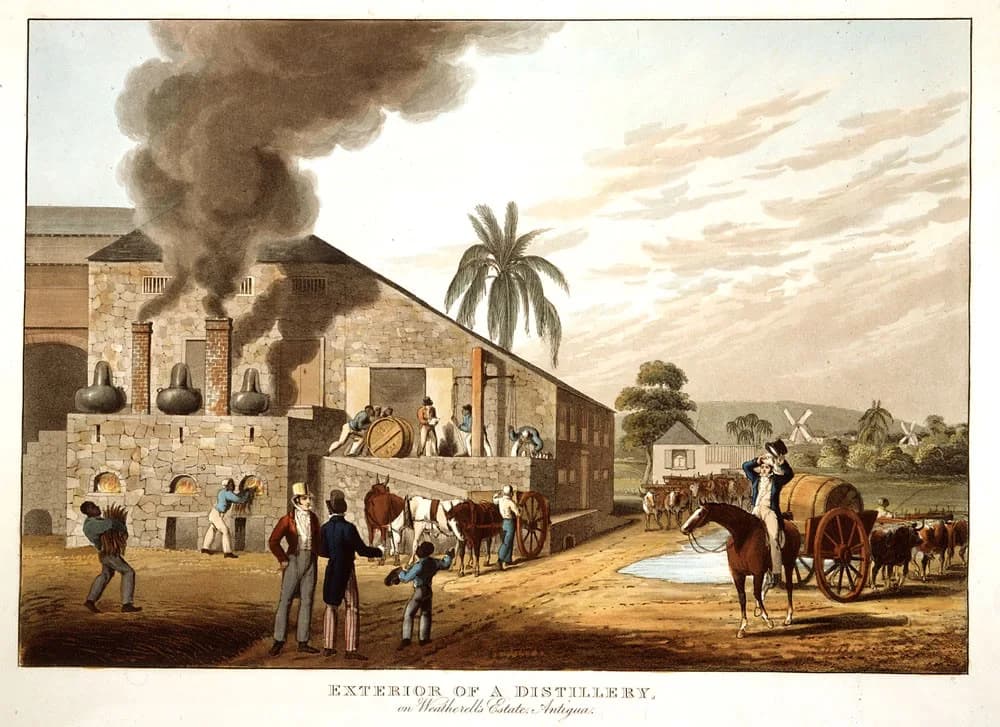
New England’s distillers had learned to coordinate raw materials, credit, shipping, skilled labor, cooperage, fuel, warehousing, and markets on a remarkable scale. Newport alone supported twenty-two working distilleries in a town of perhaps seven or eight thousand people.
The result was something that looked surprisingly like a factory system, more than a century before the Industrial Revolution transformed America.
New England, in a sense, invented the factory before it invented the machine. The book Spirits of the Republic: Rum, Whiskey, and the Making of Early America follows that story wherever it leads.
To discover more, pre-order the book at square.link/u/2NUxlfvs